Easier to Discuss Sex, Drugs and Rock & Roll than why Women are not in the Boardroom – What’s That About?
|
On Tuesday, March 16th I’m honored to moderate a panel on Women on Public Company Boards. The session is being produced by Broads Circle. Founder Darya Allen-Attar has been an amazing supporter of having this conversation here in LA. Here are my opening remarks. Give them a read and join me in this discussion to get independent thinking in the boardroom.
|
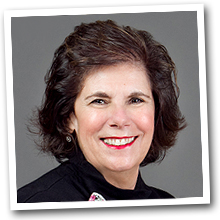
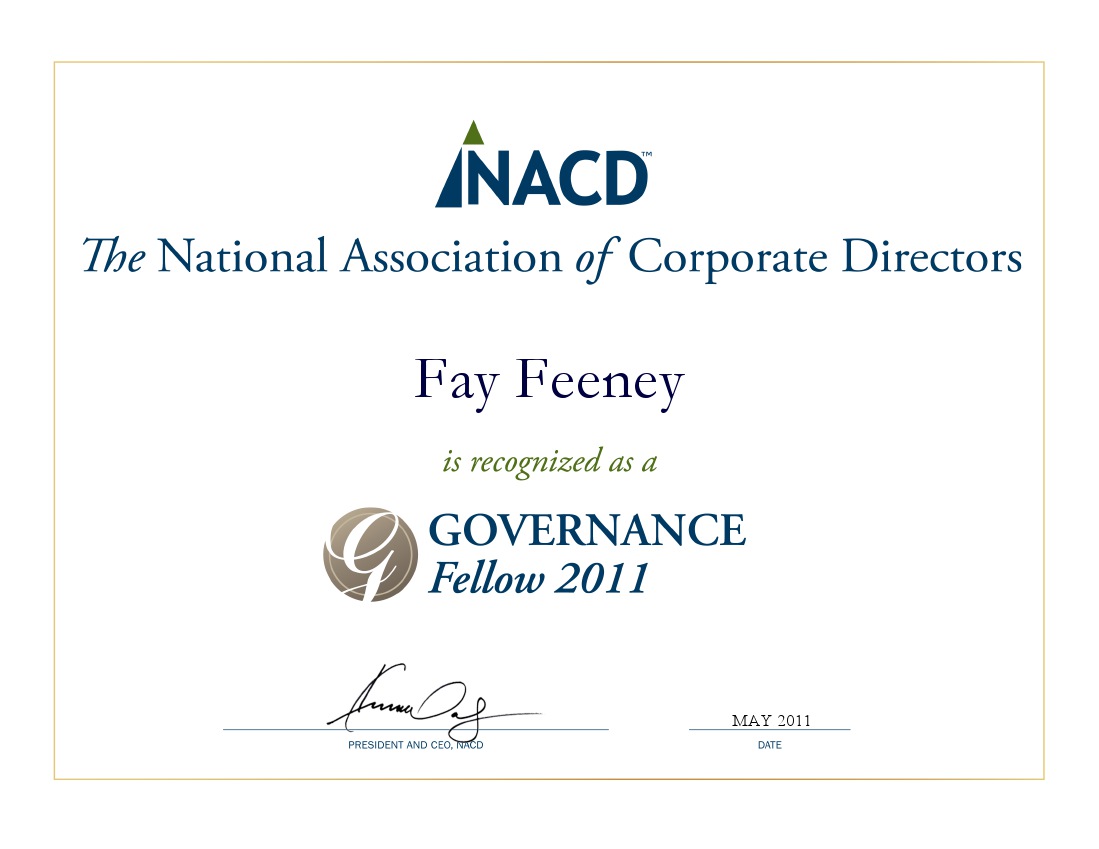
I’m Fay Feeney and my company, Risk for Good is a new venture set up with one purpose: to consult exclusively with independent corporate directors to strengthen their expertise and oversight of: risk management, sustainability/corporate social responsibility and talent diversity. These are areas I believe the 21st century director will need to understand to keep their business strategy relevant.
Now that you know who I am, I want to take a few minutes to level set on our topic: Women on Public Company Boards
Tonight I want to acknowledge you for your interest. In 2010 where we discuss sex, drugs and rock & roll openly, we continue to have a challenge speaking with transparency about who gets rewarded with: money, power and public company board appointments.
That will not be the case tonight. Our economic growth, our ability to innovate and our ability to re-energize our uniquely American values need us to stop blaming business and shift our focus to talking about adapting to a changing world. A return to a prosperous future is severely impacted when the discussion is constrained by a system that requires sameness.
Let me speak briefly about women’s talent and how it fits into my definition of “diversity,” we are part of a group I like to call “non-traditional” candidates, which is a broader concept that goes beyond race, ethnicity and gender diversity.
The National Association of Corporate Directors frames diversity as “personal characteristics” that are considered along with “professional characteristics.” I see it simply as being open to bring a new perspective to board appointments with one goal: ensuring that the discussions and strategies do not fall victim to “group think.”
As executives and business leaders we need to reset our thinking to this new reality: it will take the leadership of executives who are committed to collaboration and cooperation to keep our economy growing. These are areas where I believe we as women excel.
Tonight we will look at women on public company boards from a perspective of the past, present and future.
Let me begin with the future. Let’s take a minute and think: in my wildest dreams if I could sit on a public company board which company would I choose and why?
Anyone want to share their pick?
My crystal ball says the future will be forever changed from just one factor: The internet has created a business transparency where trust can be eroded quickly in the one to many communication options. Now we can make or break a reputation in 140 characters or less.
From the Future let’s look at the past:
The earliest mention of a US woman on a corporate board is Marjorie Meriwether Post; her father’s death in 1914 left the twenty-seven-year-old heiress the owner of the rapidly growing Post cereal company. She took charge of the board and showed great business acumen in her dealings.
In 1987, the very first independent Director of the Year to ever be honored by NACD was Juanita Kreps. She had many board appointments including R.J. Reynolds and J.C. Penny. No putting a label of “token” woman on her.
Now to 2010 and Women on Public Company Boards:
What both men and women want from boards are profitable and sustainable outcomes. These effective boards do well in strategy, corporate performance, and financial oversight.
Tonight our panel will speak to how women fit into the corporate governance landscape.
The 2009 statistics show that women are far out of proportion to their numbers, education and purchasing power. Women are approximately 50 percent of the labor pool and exercise influence over 70 percent of household spending in the United States
Catalyst found that, on average, Fortune 500 companies with 3 or more women on their boards of directors significantly outperformed those with the least number of women in return on equity (by 53 percent) and return on invested capital (by 66 percent).
However, companies are still lagging in appointing women to board seats. The Catalyst Census: of Fortune 500- 2009 statistics:
- Women held 15.2 percent of board seats, a number that reflects little growth over the past five years.
- Almost 90 percent of companies had at least one woman director, but less than 20 percent had three or more women serving together.
- Women’s share of board chair positions remained flat at 2.0 percent.
In California, a 2009 UC Davis found that nearly a third of the state’s biggest companies — 118 of the 400 — have no women at the top, either on their boards or in their executive offices.
Let me name a few of these firms: National Semiconductor, Callaway Golf, Hansen Natural.
- In California’s corporate boardrooms women occupy 320 of 3,252 board seats in the top 400 companies — just 9.8 percent.
- Almost half of the top 400 — 46 percent — have no women directors; another 34 percent have just one.
Kudos to the top 25 companies with the greatest number of women in executive suites and boardrooms included some of the state’s most prominent companies: Jack in the Box at No. 5; Clorox at No. 14; Peet’s Coffee & Tea at No. 18; Health Net at No. 19; and Disney at No. 22.
So where is the boardroom thinking on diversity?
NACD’s 2009 Public Company Governance Survey asked the question:
Is “Gender and ethnic diversity are important criteria for board recruitment.”
28 percent – strongly agree
49 percent – agree
23 percent – disagree
I’m not a math whiz but at the current rate of change, it could take women 67 years to reach parity with men as corporate officers. That is in contrast to the 11 years it took the United States to put a man on the moon.
So let me shine a light on the matter, on December 16, 2010, the SEC approved new proxy disclosure enhancement rules, effective February 28, 2010, that mandated certain new disclosure rules. Among them is a new rule that requires companies to disclose if and how they consider diversity in recruiting board candidates.
Let me conclude my remarks and get to this fabulous panel: This data does not tell us why women occupy such a small minority of the board appointments but it seems to me that this new disclosure requirement will begin the conversation.
Let’s all take a deep breath and appreciate the women who paved the way for us as boardroom pioneers, respect the present and the challenges women sitting in boardroom today face and let’s turn to our panel of experts as we envision a future boardroom that profits from women’s talents. With great pleasure, let me introduce our panel.

Posted: March 11th, 2010
at 1:39am by Fay Feeney
Tagged with • Enterprise Risk Management, corporate board, corporate governance, fay feeney, risk tolerance, values
Categories: Uncategorized
Comments: No comments